

Timetable of activities
| Thursday, 19 November 2026, Grand Hotel Bernardin, Portorož | ||||||||||||
|---|---|---|---|---|---|---|---|---|---|---|---|---|
| 7:00 – 8:00 | Setting up posters and displays | |||||||||||
| 8:00 – 9:00 | Reception and registration of participants | |||||||||||
| 9:00 – 9:30 | Opening session | |||||||||||
| 9:30 – 10:00 | Keynote lecture | |||||||||||
| 10:00 – 10:30 | Keynote lecture | |||||||||||
| 10:30 – 13:30 | Presentation of papers | |||||||||||
| 13:30 – 14:30 | Lunch break | |||||||||||
| 15:00 – 18:00 | Presentation of papers | |||||||||||
| 20:00 | Gala dinner at the Grand Hotel Bernardin with live music | |||||||||||
|
Friday, 20 November 2026, Grand hotel Bernardin, Portorož
|
||||||||||||
|---|---|---|---|---|---|---|---|---|---|---|---|---|
| 9:00 – 10:00 | Keynote lecture | |||||||||||
| 10:15 – 15:00 | Presentation of papers | |||||||||||
Keynote Lectures
The Sternbrücke- an atypical railway bowstring,
|
 |
The planning and design of bridges and major civil engineering structures in densely built-up urban areas is a complex task. It is therefore all the more surprising that a holistic approach is not necessarily adopted from the outset when designing major public projects. All too often, constraints – such as spatial limitations, the creation of transport links, the concerns of local residents or nature conservation – are viewed as obstacles rather than as a catalyst for creativity.
The Sternbrücke in Hamburg is a typical example of the difficulty to do major infrastructural intervention in the heart of the city. The design result is an atypical railway bowstring which combines the functional and architectural requirements in an integrated design.
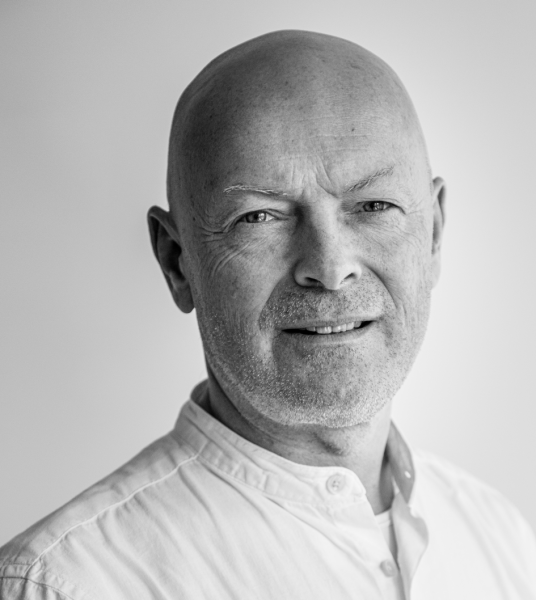
Laurent Ney is a structural engineer and architect trained in Belgium and Germany. Since 1995, he has been a lecturer in structural engineering at several Belgian universities. In 1996 he founded the engineering firm Ney & Partners in Brussels and Luxemburg. Today, the main office is in Brussels, with satellite offices in Luxembourg, Tokyo, Bordeaux, Delft and Hanoi. Laurent’s approach is characterised by research-based design: optimisation and form-finding. This integration and optimisation of structural elements aims to overcome the classic hierarchic assembly of constructive solutions, and as a result leads to a design that is wholly integral: architecture, structure and context are addressed in one overall proposal. Each design is not a matter of signature or of form, but it is the result of a series of questions that he responds to. Laurent combines practical and theoretical knowledge. He published several books on his design approach and is a regular keynote speaker at international engineering conferences as IABSE, IASS and Footbridge. (short version)
Many bridge designs of Ney & Partners were awarded in Belgium and abroad because of their typological innovation. In 2021 Ney & Partners were shortlisted for the RIBA Stirling Award with their design for the footbridge of Tintagel Castle in Cornwall, (UK). In 2020 Laurent Ney won the ‘medal Académie d’Architecture française, Research and Technique. In 2019 he received the Gustave Magnel 13th Gold Medal 2014-2018 for the bridge ‘De Lentloper’ in Nijmegen (NL).
In 2018 Laurent Ney was awarded twice in Japan, the prestigious Tanaka Award for Excellence in Bridge Design and Construction and the Japanese Architectural Association Award, both for the design of the footbridge in Dejima, Nagasaki. (large version)
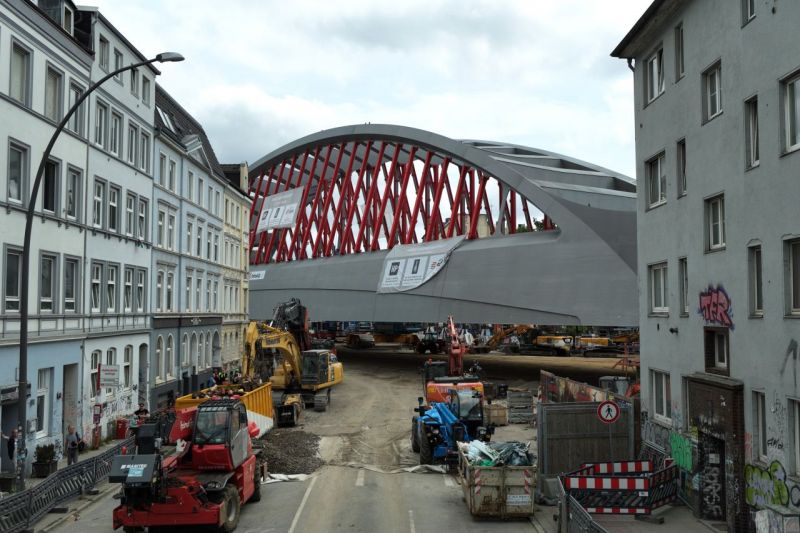
Moving of bridge Sternbrücke in the heart of Hambrurga, source: LinkedIn (Mammoet)
Seismic Assessment of Masonry Buildings in the New Eurocode 8: Rethinking Safety in Displacement-Based Nonlinear Analysis.
|
 |
The second generation of Eurocode 8 introduces significant innovations in the seismic assessment of existing masonry buildings based on nonlinear static analysis. A particularly relevant conceptual change concerns the treatment of uncertainties in displacement-based verification. Since seismic safety is assessed by comparing displacement demand with global displacement capacity, the new framework recognises that applying partial safety factors directly to material strengths or other mechanical properties is not necessarily consistent with the verification format. Instead, uncertainty is accounted for through a partial factor applied to the global displacement capacity. This approach raises important methodological questions, as the appropriate safety factor should reflect the expected dispersion of global displacement capacity resulting from uncertainties in local mechanical and deformation-capacity parameters. Its robust estimation therefore requires propagating the variability of these parameters through nonlinear structural models. The lecture will discuss the implications of this approach, highlighting the importance of reliable experimental data and sufficiently accurate modelling strategies. Particular attention will be devoted to the limitations of simplified modelling approaches, including those proposed within Eurocode 8, which may affect not only the estimated dispersion but also the median prediction of seismic displacement capacity.
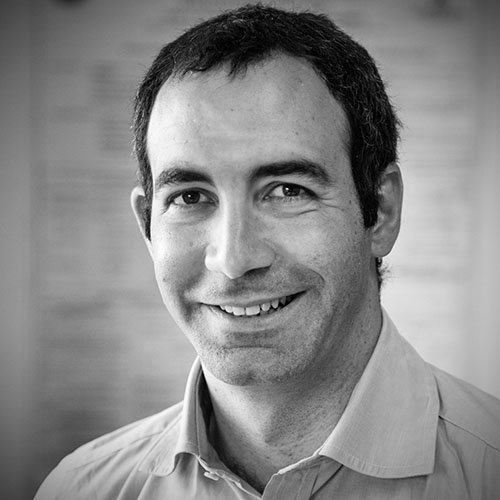
Andrea Penna is Professor of Structural Engineering and Dean of the Department of Civil Engineering and Architecture at the University of Pavia, where he teaches Design and Rehabilitation of Masonry Structures. His research focuses on the seismic response of structures, with particular emphasis on masonry buildings, seismic risk mitigation, and the protection of cultural heritage. In collaboration with the EUCENTRE Foundation, he has led major large-scale shake-table experimental campaigns on masonry buildings, including the simulation of repair and strengthening interventions. He is also among the developers of TREMURI, a structural analysis software widely used in professional practice for the nonlinear analysis of masonry structures. Over the past thirty years, he has gained extensive field experience in post-earthquake damage surveys in Italy and worldwide.
Steel-Composite Bridges for a Low-Carbon Future: Emerging European Design Trends with Hot-Rolled Sections
|
 |
This keynote lecture reviews the ongoing transformation of the European steel industry towards low-emission production and its impact on bridge construction. It presents low-carbon steel solutions available for bridge infrastructure, offers practical recommendations for their specification in public procurement, and discusses current design trends, including the increasing use of high-strength steel S460 and weathering steel in combination with hot-rolled sections. The presentation concludes with recent bridge project case studies from Central and Eastern Europe, showcasing innovative and sustainable approaches that are shaping the next generation of steel–composite bridges.
Mike Tibolt is Advanced Bridge Solutions and Sustainability Lead at ArcelorMittal Steligence. He holds a PhD in Structural Engineering and a Master’s degree in Civil Engineering from the University of Luxembourg. As a Resident Engineer at ArcelorMittal Steligence®, he provides technical support for bridge projects, assisting structural consultants, project owners, and public authorities in delivering efficient, cost-effective, and sustainable steel solutions for low-carbon bridge infrastructure. With extensive expertise in steel and composite bridge engineering, he actively promotes innovative and environmentally responsible construction practices across Europe. He currently serves as Vice-Chair of the ECCS Bridge Committee, contributing to the advancement of steel use in bridge infrastructure and fostering knowledge exchange within the European engineering community.